
|
Multiple Sclerosis is a many, many layered condition that has a long list of symptoms, including pain, fatigue, and weakness. There is currently no cure for MS. But just because there is no cure, does that mean there is nothing that can be done to help reduce these symptoms and maintain muscle health? From clinical experience, I've found massage and a variety of myotherapy techniques to be incredibly useful for patients living with MS. You can read more about my clinical experience with treating MS in this blog. I've been running for The May 50K during COVID19 isolation to raise funds and awareness for MS, so I thought its only fitting that I write up a bit of a literature review on the research! You can read the article here for the full study details, as published in the International Journal of Therapeutic Massage and Bodywork in December 2016. 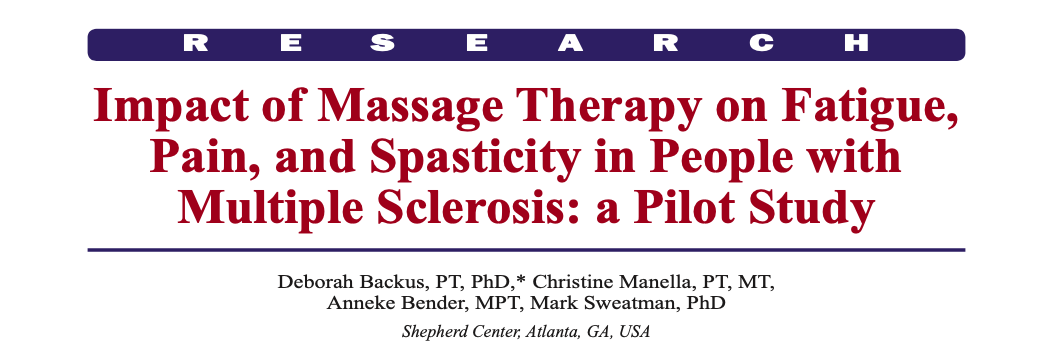 What does the research say specifically about massage therapy and MS?
There are a few things to keep in mind when we read this study. Firstly, manual therapies are hard to study, because the techniques used are almost always different every single treatment. As experienced therapists, we select techniques that are the most relevant to the patient each time they come for an appointment, and our selections are based off what we assess in the consultation, as well as what the patient agrees to on the day - for example, some days a deep pressure trigger point treatment can be tolerable and helpful, and other days it may feel too much. Secondly, Multiple Sclerosis affects people in widely different ways. There is no one "best" treatment technique for MS, and the symptom types, areas and intensity are vastly different from person to person. Keeping that in mind, lets have a look at how these researchers completed their study, and what they found. How did they design a study for massage therapy for Multiple Sclerosis? A specific massage sequence was designed for the study. This sequence was to be followed to the letter for every patient at every session, regardless of the symptoms on the day. This isn't an ideal way of providing a treatment in a clinical setting, however in a research setting its important to be able to make the tested treatment or therapy able to be reliably the same for every subject in the study. The sequence involved a full body massage therapy routine which included gliding strokes, kneading, cross fibre friction, and trigger point treatment. The 24 participants were scheduled for a weekly one hour treatment using the specific massage routine for 6 weeks. If a participant missed a scheduled treatment, they aimed to reschedule it within a week, so that each participant received 6 identical treatments over the course of no longer than 8 weeks. How did they measure and assess it? Five measurement scales were used to assess the outcomes in a variety of symptoms. The participants recorded scores for
What did they find out? The results overall suggested that massage therapy was a safe and useful tool in providing relief from fatigue and pain, and improving mental health and general quality of life. Fatigue - The MFIS indicated that 22 out of 24 participants reported decreased fatigue scores. There was a significant correlation between fatigue decreasing and pain decreasing. Spasticity - 19 out of 24 participants completed the MAS spasticity evaluation, and of these, 16 reported experiencing spasticity symptoms ranging from slight to considerable increase in muscle tone. There were no significant changes in spasticity after the end of the 6 week treatment period. Pain - On average, participants reported a significant 18% reduction in pain on the MOS Pain Effect Scale. The reduced pain scores correlated with improved mental health scores. Mental Health - A significant increase in the total scores on the MHI indicates overall mental health improvement. A small number of participants did not improve on some subscales, such as anxiety (3 participants) and depression (1 participant) Quality of Life - Overall, the quality of life scores on the HSQ showed improvement. Emotional and Social subscales showed more improvement than Health and Physical. The results indicated that as fatigue and pain decreased, measures of quality of life increased. Can we help you? Do you have MS and want to discuss treatment options? Our clinic is temporarily closed due to COVID19, but we expect to reopen by June. Check our availability on our online bookings page for updates. Are you receiving assistance from MS Employment Services? You may be eligible for funded Myotherapy treatment through your Occupational Therapist. Contact your OT to see if you can apply, and they will forward us the documents to begin the process for you. Do you have MS, you're currently working or seeking work, and you're not receiving assistance? Check the MS Employment Services website to see if you're able to receive support. |
Meet Our Team
We have a team of great practitioners available 7 days a week at our Rowville clinic. Archives
July 2024
Categories
All
|
 RSS Feed
Got a question about Myotherapy?
Contact Mel by phone, email or Facebook

Simple Wellness Myotherapy & Remedial Massage Clinic
Shop 12B 150 Kelletts Rd Rowville VIC 3178 |

Phone us on
03 8204 0970 |

|