
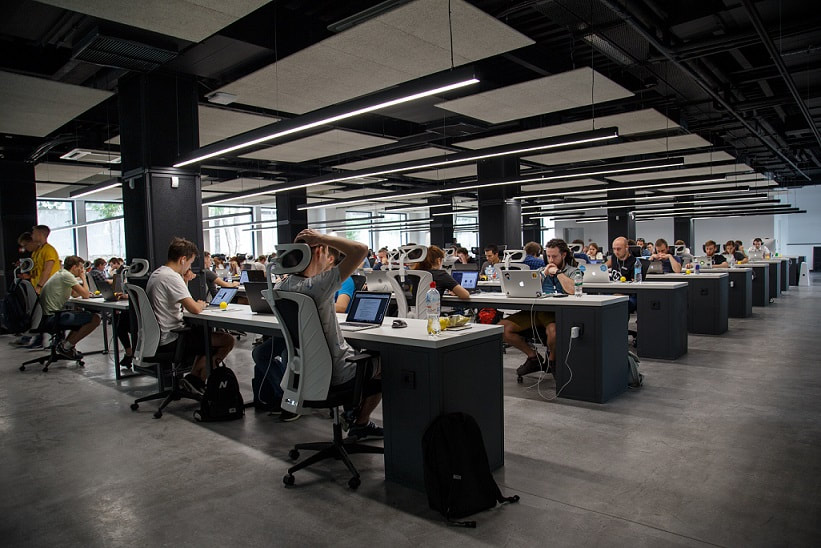
 If you work at a desk for hours on end, you know that it can be uncomfortable at the best of times. Office workers have just as much risk of injury and chronic pain as other more physically strenuous occupations. You may be at risk of issues including back pain, neck pain, repetitive strain injury or RSI and carpal tunnel syndrome.
So how can you minimise your chance of hurting yourself and stay at the top of your game? Our myotherapist Emily shares some of her tips for staying healthy and preventing pain and injury for office workers. Stretch often When you’re focused on your work, you often forget to shift position. Unfortunately, our bodies weren’t designed to stay in a position for hours at a time. That’s why the simplest tip is to stretch whenever you feel stiff, sore or fatigued. Stretching can also help to boost blood flow to the brain, which means you are more focused and productive. You can simply stretch at your desk if needed – stretch out your neck, shoulders and back, and do some circles with your ankles. But you can also do a standing stretch, which brings us to our next tip. Set yourself reminders to move Small amounts of movement throughout the day add up when it comes to preventing office injuries. But when you’re in the zone, you might forget! That’s why it’s useful to set yourself a reminder or alarm on your phone or computer. Aim for at least 1-2 minutes per hour of movement. This might be standing and stretching, going and getting a glass of water, making yourself a coffee or tea, going to the toilet or just walking around the office to get your muscles and joints moving. Give a sit/stand desk a try Desks that can alternate between a seated and standing position have become popular recently. They allow you the best of both worlds – you can sit for a bit, then switch to standing as a break from sitting. Have a chat to your employer about whether you can trial a sit-stand desk. The good thing is that many people find sit-stand desks boost productivity, so employers are often open to them. If you work for yourself or you are the boss, you can hire sit-stand desks and other equipment before purchasing. Make the most of lunchtime It can be tempting to eat lunch at your desk and power through the to-dos. But your lunch and break times are an opportunity to move around and give your muscles and joints a break as well. Get up and get moving. Head to a local park to have your lunch if it’s sunny outside. Grab a coffee from the café around the corner. You can even go for a brisk 5-minute walk around the block at the end of your break to wake up your brain and your body. That way, you’ll go back to work feeling refreshed. Get moving before or after work Some days you won’t get much time to move at work, so make the most of the hours outside of work. Find a way to get your body moving on a regular basis. This doesn’t mean you need to slog away at the gym for an hour every day. You can do some yoga stretches at home, walk the dog or go to the playground with your kids. If you do find yourself too tired to move after work, try getting up 15 minutes earlier and go for a walk around the block before work. It seems counter-intuitive, but exercise actually boosts your energy and relieves fatigue. Even a little bit each day will add up! Get a regular remedial massage or myotherapy treatment Your muscles and joints need care, just like every other part of you. That’s why regular treatments can help to prevent injury and pain. Our desk worker clients find that a treatment every 2-6 weeks helps to relieve tension and pain. Many report that they have fewer headaches, lower stress levels, improved sleep and mood and greater movement in joints and muscles. So if any of those are on your wish list, regular massage and myotherapy might be the answer! Is regular massage or myotherapy on your to-do list? Our myotherapist Emily is currently open for new clients. You can book with a session with her here. |
Meet Our Team
We have a team of great practitioners available 7 days a week at our Rowville clinic. Archives
July 2024
Categories
All
|
 RSS Feed
Got a question about Myotherapy?
Contact Mel by phone, email or Facebook

Simple Wellness Myotherapy & Remedial Massage Clinic
Shop 12B 150 Kelletts Rd Rowville VIC 3178 |

Phone us on
03 8204 0970 |

|