
|
By Duke Autret Frozen Shoulder can be painful, physically limiting and downright annoying. It can be a difficult condition to treat, but with persistence can improve. Lets look at what it is and what can be done about it. 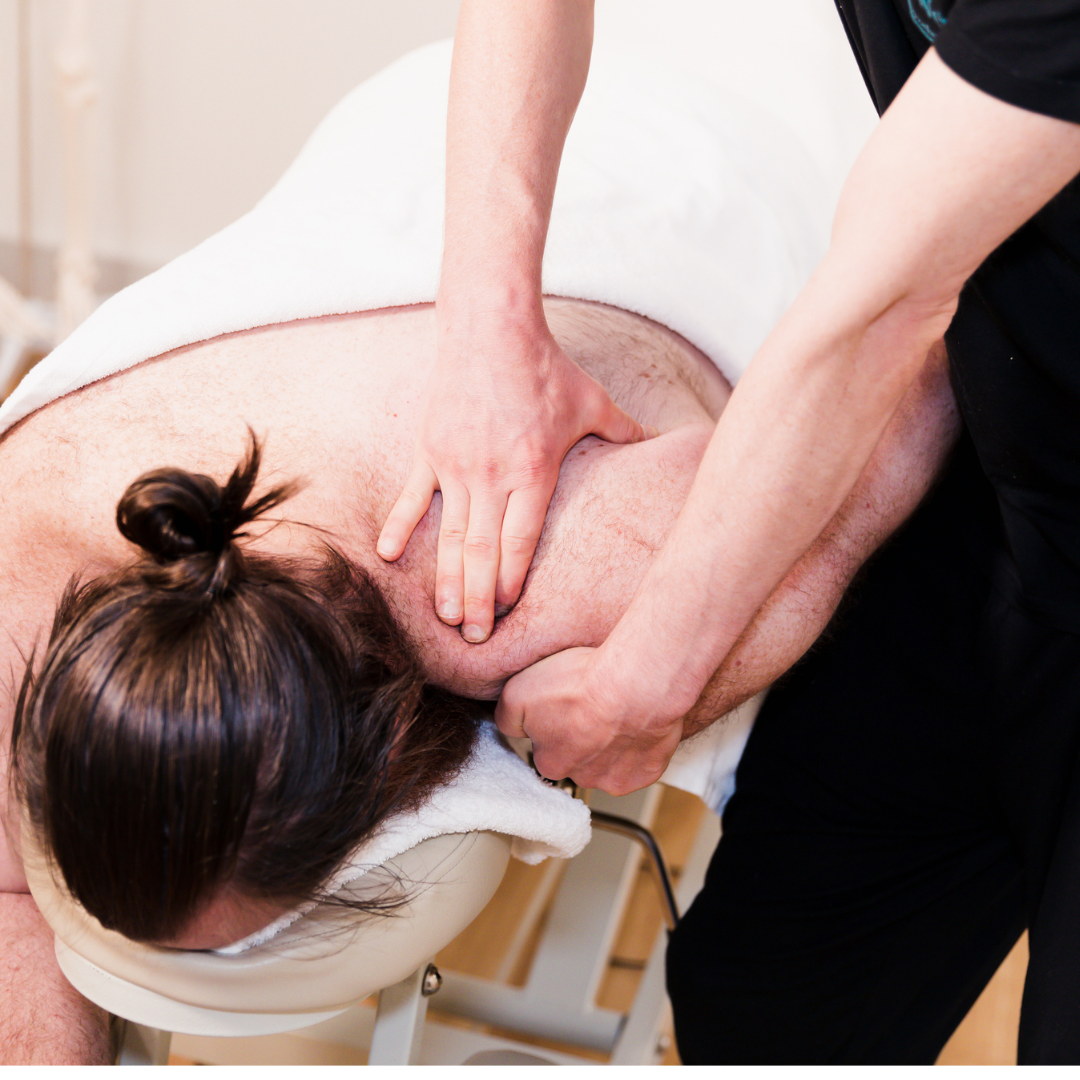 This condition is also called Adhesive Capsulitis, and is where the shoulder and more specifically the Glenohumeral (ball and socket) joint capsule of the shoulder starts to become painful and restricted in its movements. It can become so stiffened that it can progressively become ‘frozen’ or unable to move in most directions - especially external rotation (like trying to put your hands behind your head), abduction (out to the side and up like snow angels), internal rotation (like reaching down and behind your back to scratch a shoulder blade) and flexion (lifting the arm up like an underarm throw and then all the way till you’re putting your hands up!).
This condition's medical causation is not well understood but it’s more likely to occur over the age of 40 and where there is prolonged immobility of a shoulder or where there has been a previous history of trauma to a shoulder, and most especially, when these factors are combined, although it can certainly occur without any obvious factors as well. Often it includes a progression through distinct stages; a freezing stage, a frozen stage, and finally a thawing stage. In the first stage things are acute and the shoulder will be quite painful with the movements previously listed, in fact it can be painful with any shoulder use when its at its most aggravated, however there is still some ability to move through the pain and the ranges of motion. In the second stage the pain may or may not diminish completely, however there is no ability to move the shoulder joint through these full ranges of motion, and typically, to compensate, people start using their shoulder blade instead to move and shrug their shoulder up a lot, in an attempt to get more range. Tilting from the torso to angle the arm and shoulder up is also a compensation pattern we see in this stage. The third stage is when the shoulder (at the Glenohumeral joint) spontaneously begins to improve, when pain gradually subsides and the range of motion returns to varying degrees. At this points it’s crucial to note, if it’s a true frozen shoulder you’re suffering with, that even without any intervention of any kind, about 60% of cases will resolve, almost and sometimes completely, by themselves after 2-3 years, 90% within 3-4 years, and otherwise up to 7 years according to longitudinal studies from the like of Oxford and from clinical data. How can you tell if its frozen shoulder, or another type of shoulder condition? If some of these symptoms of pain and extreme shoulder mobility limitation sound familiar you may want to seek a clear confirmation that it’s not due to some kind of shoulder Arthritis or a rotator cuff condition - often x-rays or ultrasound imaging can help to rule these out. These types of imaging can be ordered by your GP, and the results can help inform the types of treatment that will be most beneficial in getting you moving better. If you have been diagnosed with a frozen shoulder then you're likely wondering what should be done with it? Although we already mentioned the good news about spontaneous resolution to this problem, the better news is that conservative and non-invasive treatments such as myotherapy, massage and mobilisation can be very helpful and effective in reducing the time for this process, especially when combined with some home stretching and exercise therapy. As well as our treatments in the clinic we can provide you with a few choice at-home Mobilisations & Stretches and advise you on the good use of heat before and after to get things moving in the right direction again. It has to be said that this is a condition I ‘enjoy’ working with, because with some regular sessions together and your commitment to the treatment and exercises it has an excellent prognosis, down from 3-7 years to 6-24 months! Frozen shoulder is certainly a condition that requires consistency and patience. Another key element includes modification to your daily activities to avoid continuous aggravation of the area - this is something we can discuss during your treatment, and we can find easy ways of helping you adapt while your frozen shoulder is on its way to thawing. If yourself or anyone you know is currently suffering with a Frozen shoulder, please come and see us, we are here to help. Book your first appointment online or phone our clinic on 03 8204 0970 to reserve a time to begin the process. |
Meet Our Team
We have a team of great practitioners available 7 days a week at our Rowville clinic. Archives
July 2024
Categories
All
|
 RSS Feed
Got a question about Myotherapy?
Contact Mel by phone, email or Facebook

Simple Wellness Myotherapy & Remedial Massage Clinic
Shop 12B 150 Kelletts Rd Rowville VIC 3178 |

Phone us on
03 8204 0970 |

|