
|
Myotherapists train extensively in a technique called Dry Needling. Dry needling is a therapeutic technique that has gained popularity in recent years as a powerful tool for relieving musculoskeletal pain, restoring mobility and promoting overall wellness. Its an advanced treatment technique that involves inserting very thin, sterile needles into specific muscles in the body to induce a rapid change in muscle tension. Often the target of dry needling is a trigger point within a muscle. These trigger points are tight bands within the muscle tissue that can cause pain, discomfort, and limited range of motion when they become overly contracted or dysfunctional. 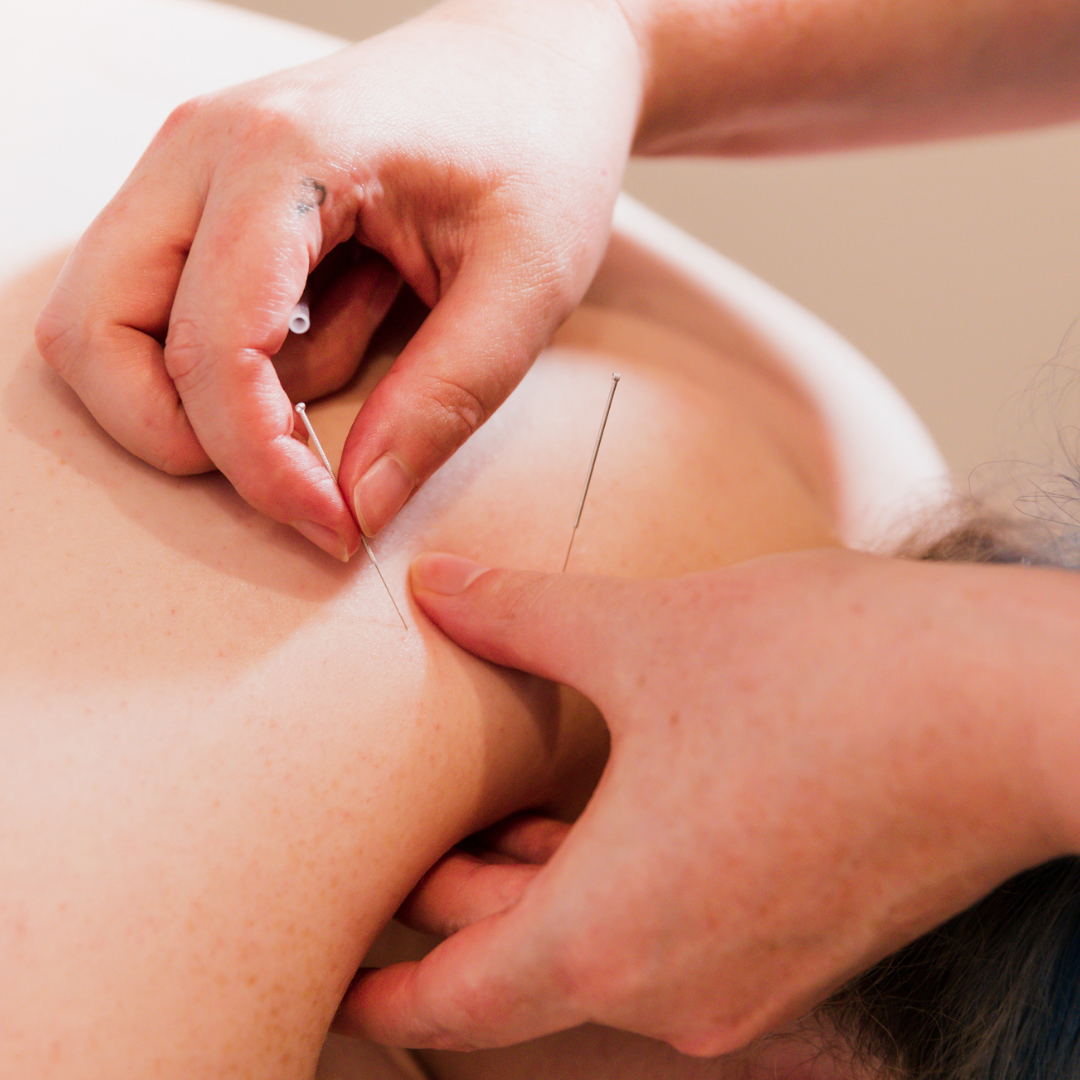 The primary goal of dry needling is to alter the muscle tension and promote the natural healing processes of the body. Often this technique can elicit a twitch response from the muscle, causing it to contract and then relax, which is felt as a sudden, involuntary muscle twitch. This contraction and relaxation help to release tension and improve blood flow to the area, which can accelerate the healing process. Its usually not painful, but can be surprising to patients. Some practitioners will use a more stimulating technique to specifically seek out the twitch response which can be highly beneficial, especially for patients who have extreme tightness and pain. For patients who don’t feel comfortable with a very stimulating approach, a gentler technique of positioning and resting needles can also be used with good effect. The type of techniques used really depends on the patient and how their body responds - we see many patients whose bodies are very sensitive to needling and get amazing results from very low stimulation; and we also see many patients who prefer to really “feel it” by experiencing significant twitch responses. Theres no right or wrong way to do it, its always tailored to the individual being treated.
Dry needling can be particularly effective in treating a wide range of musculoskeletal conditions, including chronic pain, muscle stiffness, joint pain, and even some neurological conditions. It is commonly used to address issues such as neck pain, back pain, shoulder pain, and headaches, among others. Athletes and sports players tend to get very good results from dry needling. A gentler approach to dry needling can also be really effective in situations where the pain is so severe that its not tolerable to apply pressure using other myotherapy techniques like massage or joint mobilisation. One of the key advantages of dry needling is its minimally invasive nature. The needles used in this technique are extremely thin, and patients typically experience minimal discomfort during the procedure. Often a pin prick sensation is felt as the needle punctures the skin, and then patients are surprised by how minimal the discomfort of the treatment is. Many patients report immediate relief and improved mobility after a session. Like with any technique where skin is being punctured, there are risks associated with dry needling. Our consent form for treatment provides information on the risks, including things like small bleeds, post needling soreness, and pneumothorax. Its important to know that while risks like pneumothorax (punctured lung) are serious, when you receive dry needling from a qualified therapist the risk is very low due to the extent of the practitioners training and experience. Because of these risks, dry needling should only be performed by trained and qualified practitioners. Our clinic only allows Myotherapists to provide dry needling, because dry needling is included as core curriculum in all Myotherapy training programs. This means your myotherapist has had to study for 6+ months under close supervision and pass exams in order to become qualified. There are short course 2-3 day programs available for therapists to become registered to provide dry needling, which is why you may find remedial massage therapists, physiotherapists, chiropractors and osteopaths who offer dry needling. These practitioners only get a very short amount of time to learn and practice in their weekend course before they begin offering dry needling to patients. Want to give dry needling a go? Book online and make sure to pick one of our 5 Myotherapists as your practitioner. |
Meet Our Team
We have a team of great practitioners available 7 days a week at our Rowville clinic. Archives
July 2024
Categories
All
|
 RSS Feed
Got a question about Myotherapy?
Contact Mel by phone, email or Facebook

Simple Wellness Myotherapy & Remedial Massage Clinic
Shop 12B 150 Kelletts Rd Rowville VIC 3178 |

Phone us on
03 8204 0970 |

|